
Description
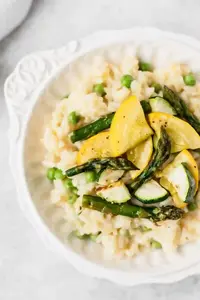
A creamy stovetop spring vegetable risotto with asparagus, peas, summer squash, and zucchini. Brightened with lemon and finished with Parmesan.
Ingredients
Scale
-
- 2 tablespoons (30 ml) extra virgin olive oil, divided
- 1 cup (130 g) asparagus, trimmed and cut into bite-sized pieces
- 1 cup (120 g) summer squash, cut into bite-sized pieces
- 1 cup (115 g) zucchini, cut into bite-sized pieces
- 2 cloves garlic, minced
- 1 shallot, diced
- 1 1/2 cups (285 g) arborio rice
- 1/2 cup (120 ml) white wine
- 4 cups (960 ml) vegetable stock, warm
- 2 tablespoons (28 g) unsalted butter
- 2 teaspoons (10 ml) lemon juice, freshly squeezed
- 1 teaspoon (2 g) lemon zest (from 1 lemon)
- 1/2 cup (50 g) Parmesan cheese, shredded or grated
- 1 cup (140 g) peas, fresh or frozen
- Salt, to taste
- Pepper, to taste
Instructions
- Step 1: Prepare the Broth: Warm the vegetable stock in a saucepan over low heat. Keep it warm throughout the cooking process to help the rice cook evenly and absorb flavor without temperature shock.

- Step 2: Sauté Aromatics First: Heat 1 tablespoon (15 ml) olive oil in a large pot over medium heat. Add the diced shallots and minced garlic. Stir continuously for about 3 minutes until they are soft and fragrant, forming a flavorful base.
- Step 3: Toast the Rice: Add the arborio rice to the pot with the aromatics. Stir frequently for approximately 2 minutes until the edges of the rice grains become translucent. This toasting step gives the risotto a nutty flavor and prepares the rice for liquid absorption.
- Step 4: Add Wine Gradually: Pour in the white wine and let it simmer. Stir often until the wine has mostly absorbed into the rice. This imparts acidity and depth. If you prefer not to use wine, substitute with an equal amount of warm vegetable stock.
- Step 5: Introduce Stock in Stages: Ladle in about 1 cup (240 ml) of the warm vegetable stock. Stir frequently allowing the rice to absorb the liquid before adding the next ladle. Continue this process until the rice is creamy yet al dente, which should take about 25 minutes. Avoid adding too much stock at once to prevent uneven cooking.
- Step 6: Incorporate Vegetables: Approximately 5 minutes before the risotto is done, stir in the peas, asparagus pieces, summer squash, and zucchini. This ensures the vegetables remain slightly crisp with bright colors.
- Step 7: Finish with Flavor Boosts: When the rice reaches a creamy and tender texture, remove the pot from the heat. Stir in the remaining 1 tablespoon (15 ml) olive oil, unsalted butter, lemon juice, lemon zest, and Parmesan cheese. This final mix adds richness, brightness, and balances the dish’s flavors. Season with salt and pepper to taste.
- Step 8: Serve and Enjoy: Spoon the risotto into serving bowls. Garnish with extra Parmesan cheese, fresh herbs such as parsley or basil, or a drizzle of olive oil if desired. Serve warm.
Notes
-
- Storage Tips:
- Room Temperature: Store risotto in an airtight container at room temperature for up to 4 hours before serving or refrigerating.
- Refrigeration: Keep risotto in an airtight container in the refrigerator for up to 3 days to maintain texture and flavor.
- Freezing: Place risotto in a freezer-safe container and freeze for up to 2 months. Thaw overnight in the refrigerator then reheat gently.
- Expert Tips:
- Use high-quality Arborio rice for the creamy risotto texture; its starch content is essential.
- Trim asparagus ends if tough by snapping them off before cutting to ensure tender bites.
- To prevent risotto from being too dry, add 1/2 cup (120 ml) warm vegetable stock slowly while stirring until creamy, especially about 5 minutes into cooking.
- Cut summer squash and zucchini into uniform 1-inch (2.5 cm) pieces for even cooking and texture.
- If the risotto tastes bland, add salt gradually while stirring, tasting after about 25 minutes of cooking to adjust seasoning.
- Garnish with fresh herbs approximately 5 minutes before serving for added color and flavor.
- Reheating Instructions:
- Reheat risotto gently over low heat with a splash of warm vegetable stock or water. Stir frequently to restore creaminess without drying out. Heat until warmed through but avoid boiling.
- Serving Suggestions:
- Serve with a light arugula salad or sautéed spinach for a fresh contrast. Gluten-free garlic bread or roasted asparagus make suitable side dishes to extend spring flavors.
- Recipe Variations:
- Substitute Pecorino Romano cheese for Parmesan for a sharper flavor, using 1/2 cup (50 g).
- Swap in seasonal vegetables you prefer or have on hand, maintaining equal volume (about 3 cups total for peas, asparagus, squash, and zucchini).
- For a non-alcoholic version, replace white wine with an additional 1/2 cup (120 ml) warm vegetable stock.
- Ingredient Notes:
- Select firm, straight asparagus stalks with vibrant green color and trim off woody ends.
- Use fresh or frozen peas for sweetness and optimal texture; avoid canned peas.
- Choose a dry white wine you enjoy drinking, such as Pinot Grigio or Sauvignon Blanc, to enhance flavor.
- Freshly grate Parmesan cheese for best flavor and creaminess; Pecorino Romano is an alternative.
- Unsalted butter is preferred to control seasoning while adding richness.
- Shallots should be firm and free of soft spots for their mild, sweet onion flavor.
Nutrition
- Serving Size: 1 serving
- Calories: 350
- Sugar: 1g
- Sodium: 600mg
- Fat: 20g
- Saturated Fat: 7g
- Unsaturated Fat: 10g
- Trans Fat: 0g
- Carbohydrates: 15g
- Fiber: 1g
- Protein: 30g
- Cholesterol: 90mg