

This spring spaghetti carbonara brings a fresh twist to a classic dish with vibrant veggies and a creamy sauce that’s easy to whip up on a busy weeknight. It’s light, bright, and utterly satisfying.
This recipe resolves issues of blandness and lack of freshness in traditional carbonara by incorporating vibrant spring ingredients for a delightful seasonal twist.
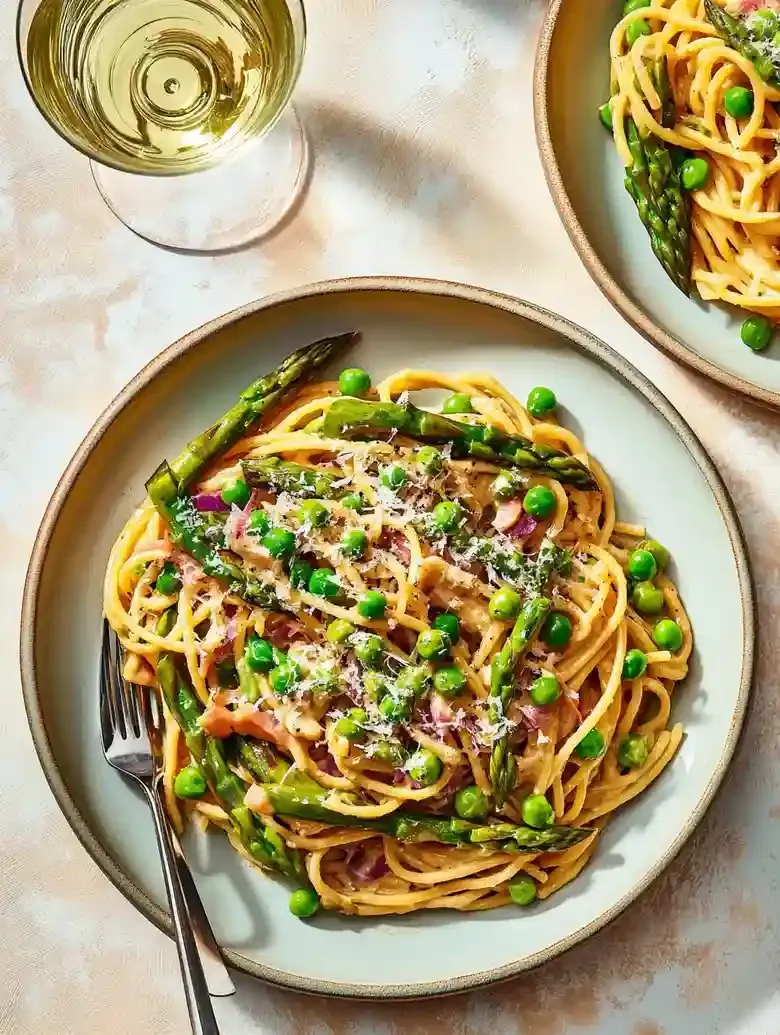
I’ve faced my fair share of kitchen mishaps while trying to nail down the right mix of flavors and textures, especially when balancing the creaminess without making it too heavy. This recipe solves that struggle, making it a go-to for anyone looking to impress guests or simply enjoy dinner with the family.
What works so well here is the combination of seasonal ingredients with simple techniques. You can have this delightful meal ready in just about 30 minutes, so it’s ideal whether you’re cooking for a quick dinner or hosting friends.
If you want to add another heartwarming dish to your repertoire, check out my broccolini frittata.
Table of contents
Why You Will Love This Recipe
- Fresh and Bright Ingredients The spring spaghetti carbonara showcases seasonal veggies like asparagus and fresh English peas, adding a colorful crunch that sings of springtime freshness.
- Simple Preparation With a quick prep time of just 10 minutes, you can have this dish ready from stovetop to table in only 30 minutes, making it perfect for busy nights.
- Comforting Creamy Sauce The combination of eggs and pecorino romano creates a rich, creamy sauce that clings to the spaghetti, giving you a satisfying texture that feels like a warm hug.
- Versatile Variations Feel free to switch up the proteins or veggies according to what’s in season or what you have on hand, making this dish a go-to option for any time of year.
Spring Spaghetti Carbonara
- Prep Time: 10 minutes
- Cool Time:
- Cook Time: 20 minutes
- Total Time: 30 minutes
- Yield: 6 servings 1x
- Category: Main Course
- Method: Boiling, Sautéing
- Cuisine: Italian
- Diet: Gluten Free (if gluten-free pasta used)
Description
A delightful spring spaghetti carbonara featuring fresh vegetables and a creamy egg sauce.
Ingredients
- 12 ounces (340 grams) linguine pasta
- 3 whole eggs
- 3 egg yolks
- 3/4 cup (75 grams) grated pecorino romano cheese
- 2 tablespoons finely chopped parsley
- 1/2 teaspoon kosher salt
- 1 teaspoon freshly ground black pepper
- 1/2 pound (227 grams) pancetta, thick-cut
- 1 bunch asparagus, chopped
- 3/4 cup (about 75 grams) sliced green onions
- 3 garlic cloves, finely minced
- 8 ounces (227 grams) fresh English peas
Instructions
- Step 1: Bring a large pot of salted water to a boil. Add linguine and cook according to package instructions until al dente. Before draining, reserve 1 cup of the pasta water for the sauce.

- Step 2: In a bowl, whisk together the whole eggs, egg yolks, grated pecorino romano, chopped parsley, kosher salt, and freshly ground black pepper until well combined and smooth.
- Step 3: Heat a large skillet over medium-high heat. Add the pancetta and cook for about 6 minutes until crispy. Remove pancetta with a slotted spoon. Drain excess fat from the pan if desired for a lighter dish.
- Step 4: Reduce the heat to medium. Add the chopped asparagus to the skillet. Cook, scraping the bottom of the pan to lift browned bits, until asparagus is slightly tender, about 4 minutes.
- Step 5: Stir in the sliced green onions and minced garlic. Cook for 1 to 2 minutes until onions are aromatic. Add English peas and 1/4 cup of the reserved pasta water. Continue cooking until peas are tender.
- Step 6: Add the cooked pancetta and drained pasta to the skillet with vegetables. Gently toss to combine all ingredients evenly. Gradually add reserved pasta water as needed to achieve desired sauce consistency.
- Step 7: Transfer the hot pasta mixture into the bowl with the egg mixture. Toss continuously to coat the pasta evenly with the sauce. Work quickly to avoid scrambling the eggs; if the sauce is too thick, add additional reserved pasta water up to 1/4 cup to thin.
- Step 8: Serve topped with more grated pecorino, a sprinkle of black pepper, and chopped parsley. Consider pairing with a simple salad or crusty gluten-free bread. Optionally, drizzle with olive oil or a squeeze of fresh lemon juice for added brightness.
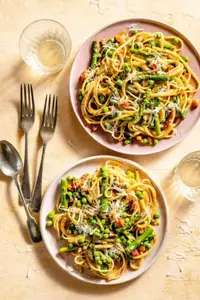
Notes
- Room Temperature: Store leftovers in an airtight container at room temperature for up to 2 days.
- Refrigeration: Keep in an airtight container refrigerated up to 5 days. Reheat gently to avoid overcooking eggs.
- Freezing: Freeze in a freezer-safe container or bag for up to 1 month. Thaw overnight in refrigerator before reheating carefully.
- Toss pasta immediately with 1 tablespoon olive oil after draining if you notice sticking to keep strands separate.
- If pancetta is not crispy after 6 minutes, increase heat slightly and cook for 1 to 2 more minutes.
- If egg mixture curdles, remove pasta from heat and stir vigorously to cool slightly, preventing scrambled eggs.
- For undercooked asparagus, cook an additional 1 to 2 minutes after adding garlic and onions.
- Use up to 1/4 cup reserved pasta water to thin the sauce to your desired creaminess before serving.
- Serve alongside garlic sautéed spinach or roasted asparagus for extra greens.
- A light arugula salad with cherry tomatoes complements the dish well.
- Add grilled shrimp or chicken on top for additional protein.
- Leftover pasta makes a good base for a cold salad with olives and sun-dried tomatoes.
- Substitute linguine with gluten-free pasta to adjust for dietary preferences.
- Replace pancetta with bacon or turkey bacon for differing flavor profiles and lighter options.
- Swap pecorino romano with parmesan cheese for a milder nutty taste.
- Use basil or arugula instead of parsley to change herbaceous notes.
- Substitute frozen peas if fresh are unavailable.
- Choose high-quality durum wheat pasta for firm texture; fresh pasta is acceptable but watch cooking time closely to avoid mushiness.
- Use thick-cut pancetta for better chew and flavor; bacon will add smokiness.
- Freshly grated Parmigiano-Reggiano ensures best flavor and melt; avoid pre-grated cheese.
- Large, fresh egg yolks are essential for creamy sauce texture.
- Use fresh garlic cloves, finely minced, for best aroma and flavor depth.
- Freshly ground black pepper is crucial for warmth and peppery bite.
Nutrition
- Serving Size: 1 serving
- Calories: Not specified
- Sugar: Not specified
- Sodium: Not specified
- Fat: Not specified
- Saturated Fat: Not specified
- Unsaturated Fat: Not specified
- Trans Fat: Not specified
- Carbohydrates: Not specified
- Fiber: Not specified
- Protein: Not specified
- Cholesterol: Not specified
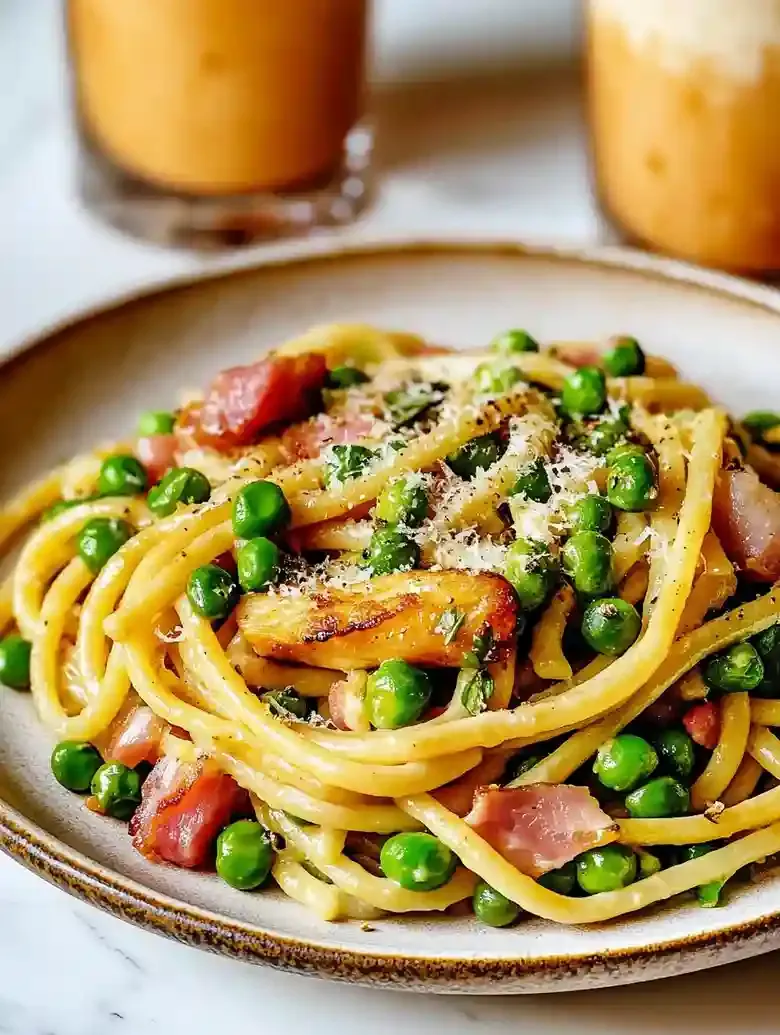
Ingredient Notes
- Spaghetti: Choose high-quality spaghetti made from durum wheat for a firm texture. Fresh pasta is great but watch the cooking time to avoid mushiness.
- Pancetta: Look for thick-cut pancetta for a satisfying chew and rich flavor. It crisps up nicely, adding depth to the dish. Bacon can work too, but it’s smokier.
- Parmesan cheese: Use freshly grated Parmigiano-Reggiano for the best flavor. Pre-grated cheese lacks the same creaminess and taste. Ensure it’s finely grated to melt well.
- Egg yolks: You’ll need large, fresh egg yolks for a rich, creamy sauce. They’re key for emulsifying with the pasta water, giving the carbonara its luxurious texture.
- Black pepper: Freshly ground black pepper is a must. It adds warmth and a peppery bite that shines through in every bite. Don’t skimp on this ingredient!
- Garlic: Use fresh cloves, finely minced to bring out a mellow sweetness as it cooks with the pancetta. Avoid powdered garlic since it won’t provide the same flavor depth.
- Spaghetti: Choose high-quality spaghetti made from durum wheat for a firm texture. Fresh pasta is great but watch the cooking time to avoid mushiness.
- Pancetta: Look for thick-cut pancetta for a satisfying chew and rich flavor. It crisps up nicely, adding depth to the dish. Bacon can work too, but it’s smokier.
- Parmesan cheese: Use freshly grated Parmigiano-Reggiano for the best flavor. Pre-grated cheese lacks the same creaminess and taste. Ensure it’s finely grated to melt well.
- Egg yolks: You’ll need large, fresh egg yolks for a rich, creamy sauce. They’re key for emulsifying with the pasta water, giving the carbonara its luxurious texture.
- Black pepper: Freshly ground black pepper is a must. It adds warmth and a peppery bite that shines through in every bite. Don’t skimp on this ingredient!
- Garlic: Use fresh cloves, finely minced to bring out a mellow sweetness as it cooks with the pancetta. Avoid powdered garlic since it won’t provide the same flavor depth.
Recipe Tips
- If the pasta sticks together, toss with 1 tablespoon olive oil immediately after draining to keep them separate while preparing the sauce.
- When the pancetta isn’t crispy after 6 minutes, increase the heat slightly and cook for an additional 1-2 minutes to achieve a good texture.
- If the egg mixture curdles, quickly remove the pasta from heat and stir vigorously to cool it slightly, preventing scrambled eggs.
- For undercooked asparagus, add an additional 1-2 minutes of cooking time after adding garlic and onions to ensure a tender bite.
- If needed, you can thin the sauce with up to 1/4 cup reserved pasta water for a creamier consistency just before serving.
Serving Suggestions
Serve spring spaghetti carbonara with a side of garlic sautéed spinach or roasted asparagus for extra greens. A light arugula salad with cherry tomatoes provides a refreshing touch alongside this dish.
Add to your meal by using spring spaghetti carbonara as a base for shrimps or grilled chicken. Use the leftover pasta in a cold pasta salad with olives and sun-dried tomatoes.
Top with a sprinkle of extra pecorino or a drizzle of olive oil for richness. A squeeze of fresh lemon juice brightens the flavors and completes this dish beautifully.
Recipe variations
- You can use 12 ounces linguine pasta or substitute gluten-free pasta depending on dietary needs when making this spring spaghetti carbonara recipe.
- Add 3/4 cup grated pecorino romano cheese along with 3 whole eggs and 3 egg yolks to achieve the creamy sauce characteristic of carbonara.
- Either pancetta or turkey bacon can be used as the protein; both require about 1/2 pound and should be cooked until crispy before adding to the dish.
- If using this recipe for more than six servings, double or triple the amounts of asparagus, peas, and pasta while maintaining the same ratio for eggs and cheese. This method also works well with Spaghetti alla Carbonara.
Save This Recipe!
How to Store?
To keep your spring spaghetti carbonara fresh and delicious, follow these storage tips:
Room Temperature: Store leftovers in an airtight container at room temperature for up to 2 days to maintain texture and flavor.
Refrigeration: Place in an airtight container, refrigerate for up to 5 days. Reheat gently to avoid overcooking the eggs.
Freezing: Transfer to a freezer-safe container or bag, freeze up to 1 month. Thaw overnight in refrigerator before reheating carefully.
Other Recipes You’ll Love
If you enjoyed this spring spaghetti carbonara or any other recipe on my blog, please leave a ⭐ star rating and let me know how it went in the comments below. I appreciate taking time to read about this recipe, thank you!
