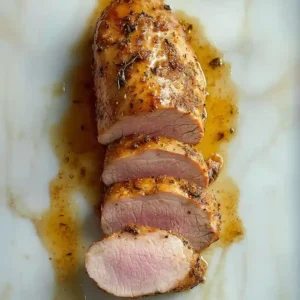
Description
This recipe balances sweet honey and tangy mustard to enhance the natural flavor of pork tenderloin while keeping it moist and juicy throughout cooking.
Ingredients
Scale
- 1 (approximately 1 to 1.5 pounds or 450 to 680 grams) pork tenderloin, trimmed with no silver skin, well-trimmed with a nice pink color
- 1/4 cup (60 ml) low-sodium soy sauce
- 3 tablespoons (45 ml) honey, preferably raw, high-quality
- 3 tablespoons (45 ml) extra virgin olive oil
- 2 tablespoons (30 ml) orange juice
- 2 tablespoons (30 ml) Dijon mustard, smooth and creamy
- 2 cloves garlic, minced (fresh)
- 1 teaspoon dried thyme (fresh thyme recommended if available)
- Kosher salt, to taste
- Freshly ground black pepper, to taste and some additional for sauce
Instructions
- Step 1: Preheat Your Oven: Set your oven to 350°F (175°C). Grease a baking sheet with nonstick spray or line it with aluminum foil for easier cleanup.

- Step 2: Season the Pork: Place the trimmed pork tenderloin on the prepared baking sheet. Season generously with kosher salt and freshly ground black pepper. Ensure you cover all sides for even flavor.
- Step 3: Whisk Sauce Ingredients: In a small bowl, whisk together the soy sauce, honey, olive oil, Dijon mustard, minced garlic, thyme, and additional freshly ground black pepper. Mix until well combined to form a flavorful glaze.
- Step 4: Coat the Tenderloin: Pour a portion of the prepared sauce over the pork tenderloin, enough to coat the top. Reserve the remaining sauce for basting during cooking.
- Step 5: Bake the Pork: Place the baking sheet with pork into the preheated oven. Roast for about 40–45 minutes, or until a meat thermometer inserted into the thickest part of the tenderloin reads 145°F (63°C). This temperature ensures the meat is cooked thoroughly while remaining juicy.
- Step 6: Baste Regularly: Every 15–20 minutes during baking, spoon some of the reserved sauce from the pan over the pork. Basting helps keep the meat moist and infuses additional flavor.
- Step 7: Rest Before Slicing: When the pork has reached the desired temperature, remove it from the oven. Let it rest for 10–15 minutes uncovered. This resting period allows the juices to redistribute throughout the meat, ensuring it remains juicy when sliced.
- Step 8: Serve and Enjoy: Slice the pork tenderloin and drizzle with any remaining sauce. Serve with preferred side dishes.

Notes
- Room Temperature: Place pork tenderloin in an airtight container. Store at room temperature up to 2 days. Avoid direct sunlight and heat sources.
- Refrigeration: Wrap the pork tenderloin tightly in plastic wrap and place into an airtight container. Refrigerate for up to 5 days to maintain moisture.
- Freezing: Wrap the tenderloin tightly with aluminum foil and place in a freezer-safe container. Freeze for up to 3 months. Thaw overnight in the refrigerator before reheating.
- For better browning, pat the pork tenderloin dry with paper towels before seasoning.
- If the sauce thickens too much during baking, add 2 tablespoons of hot water about 25 minutes into the baking process to maintain sauce consistency.
- If the pork shows signs of drying out, start spooning the reserved sauce over it every 15 minutes beginning at the 20-minute mark.
- To avoid uneven cooking, check the thickest part of the tenderloin with a meat thermometer after 35 minutes to reach an internal temperature of 145°F (63°C).
- Marinate the pork in the sauce for 1 to 2 hours before cooking to enhance flavor depth.
- Reheat gently in a 300°F (150°C) oven until warmed through, or microwave on medium power to avoid drying out the meat. Spoon additional sauce on top when reheating to maintain moisture.
- Serve with roasted sweet potatoes and green beans for a balanced meal.
- Pair with a fresh spinach salad topped with walnuts for added texture.
- Use leftover tenderloin in sandwiches, stir-fries with vegetables, or added to grain bowls with quinoa and toppings.
- Drizzle extra honey mustard sauce or a balsamic glaze over the sliced pork for an additional flavor boost. Garnish with fresh parsley or cilantro for a vibrant finish.
- Use fresh thyme instead of dried for improved aromatic flavor.
- Substitute Dijon mustard with whole grain mustard for a textured alternative.
- Replace orange juice with lemon juice for a brighter acidic note.
- Add a pinch of smoked paprika or cayenne pepper to the sauce for a subtle smoky or spicy kick.
- Select a pork tenderloin that is well-trimmed, without silver skin, and with a nice pink color to assure tenderness and optimal texture.
- Choose raw, high-quality honey to ensure sweetness and flavor balance with the mustard.
- Fresh garlic is key to releasing robust savory flavors for this recipe.
- Extra virgin olive oil contributes fruity richness and helps with browning.
- For best flavor, use fresh thyme rather than dried, but dried thyme is acceptable if fresh is unavailable.