Description
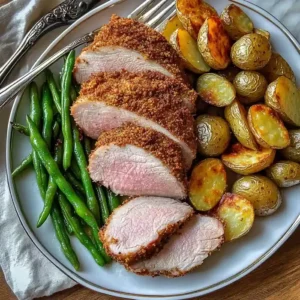
A tender, flavorful pork loin roast with a golden herb crust suitable for family dinners or special occasions.
Ingredients
Scale
- 2 to 3 pounds (900 to 1350 g) boneless pork loin roast, center-cut with marbling for added flavor and juiciness
- 3 cloves garlic, minced finely
- 2 teaspoons fresh rosemary, minced
- 2 teaspoons fresh thyme, minced
- 2 tablespoons Dijon mustard
- 1 tablespoon Worcestershire sauce
- 1 tablespoon extra-virgin olive oil
- ¼ teaspoon black pepper
- Baking dish
- Meat thermometer
- Small mixing bowl
- Aluminum foil
- Paper towels
Instructions
- Step 1: Preheat Your Oven: Set your oven to 425°F (218°C). Adjust oven racks if necessary to fit the baking dish.

- Step 2: Mix the Herb Rub: In a small bowl, stir together the minced garlic, rosemary, thyme, Dijon mustard, Worcestershire sauce, olive oil, and black pepper. Mix until the ingredients are fully combined to ensure an even distribution of flavors.
- Step 3: Prepare the Pork Loin: Pat the pork loin dry on all sides using paper towels. This step helps the rub stick better to the meat. Place the pork loin fat side up in the baking dish.
- Step 4: Apply the Rub Generously: Spread the Dijon and herb mixture all over the top of the pork loin roast. Make sure to cover it well to develop a flavorful, golden crust and to help keep the meat moist during cooking. If the mixture is too thick to spread evenly, add 1 tablespoon of warm water to thin it slightly.
- Step 5: Initial High-Temperature Bake: Place the roast in the preheated oven and bake for 15 minutes at 425°F (218°C). This step initiates crust formation and seals in juices.
- Step 6: Lower Temperature Cooking: Reduce the oven temperature to 375°F (190°C). Continue cooking the roast until the internal temperature reaches 145°F (63°C) for medium-rare doneness, approximately 40 to 45 minutes more. Begin checking the temperature at about 35 minutes (when the internal temp reaches 135°F) to prevent overcooking. Rotate the roast halfway through cooking to ensure even heat distribution if your oven heats unevenly.
- Step 7: Rest for Juiciness: Remove the roast from the oven and tent it loosely with aluminum foil. Let it rest for 10 minutes. Resting allows the juices to redistribute within the meat, resulting in tender and moist slices.
Notes
- Room Temperature: Place the roast in an airtight container and keep at room temperature no longer than 2 hours to avoid spoilage.
- Refrigeration: Store leftovers in an airtight container in the refrigerator for up to 4 days. Reheat gently to maintain moisture and flavor.
- Freezing: Wrap the roast tightly with plastic wrap and place it inside a freezer bag. Freeze for up to 3 months. Thaw in the refrigerator overnight before reheating.
- Ensure the pork loin is patted completely dry before applying the herb rub to promote a good crust.
- Closely monitor the internal temperature starting at 135°F to prevent overcooking and keep the meat juicy.
- If uneven browning occurs, rotate the pork roast halfway during cooking for even heat exposure.
- Resting the roast after cooking is essential; do not skip or shorten this 10-minute step to avoid dry meat.
- Reheat gently in a low oven or covered skillet to maintain moisture without drying out the pork. Avoid high heat reheating methods.
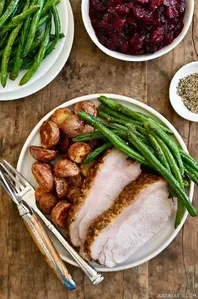
- Serve with garlic mashed potatoes or mashed cauliflower for a comforting plate.
- Include a mixed green salad and roasted asparagus to add color and variety.
- Use leftovers for pork loin sliders on gluten-free bread or incorporate into breakfast hashes or tacos.
- Consider topping with a drizzle of balsamic reduction or honey mustard sauce and garnish with fresh herbs or a light sprinkle of feta cheese.
- Substitute yellow mustard for Dijon mustard if unavailable.
- For additional texture, lightly press fresh breadcrumbs or panko on top of the herb mixture before baking for a crunchier crust.
- Adapt for gluten-free meals by using gluten-free breadcrumbs and pairing with appropriate sides.
- Choose a center-cut pork loin roast with visible marbling to ensure juiciness and flavor balance.
- Fresh herbs like rosemary and thyme are preferable to dried for brighter, more vibrant flavors.
- Mince fresh garlic cloves finely; garlic powder can be used as a substitute but will alter texture slightly.
- Use high-quality extra-virgin olive oil for richness and to help the herb rub adhere well to the meat.
- Fresh breadcrumbs can be used to add a crisp crust; homemade from stale bread or store-bought panko are both acceptable options.
Nutrition
- Serving Size: 1 serving
- Calories: 350
- Sugar: 1g
- Sodium: 600mg
- Fat: 20g
- Saturated Fat: 7g
- Unsaturated Fat: 10g
- Trans Fat: 0g
- Carbohydrates: 15g
- Fiber: 1g
- Protein: 30g
- Cholesterol: 90mg