

This pasta with peas dish is the ultimate celebration of spring! Fresh green peas and savory Pecorino Romano come together beautifully, creating a deliciously satisfying meal that’s simple yet refreshing.
This recipe tackles common problems of blandness and difficulty in achieving perfect texture, while highlighting seasonal ingredients for a bright, flavorful dish.
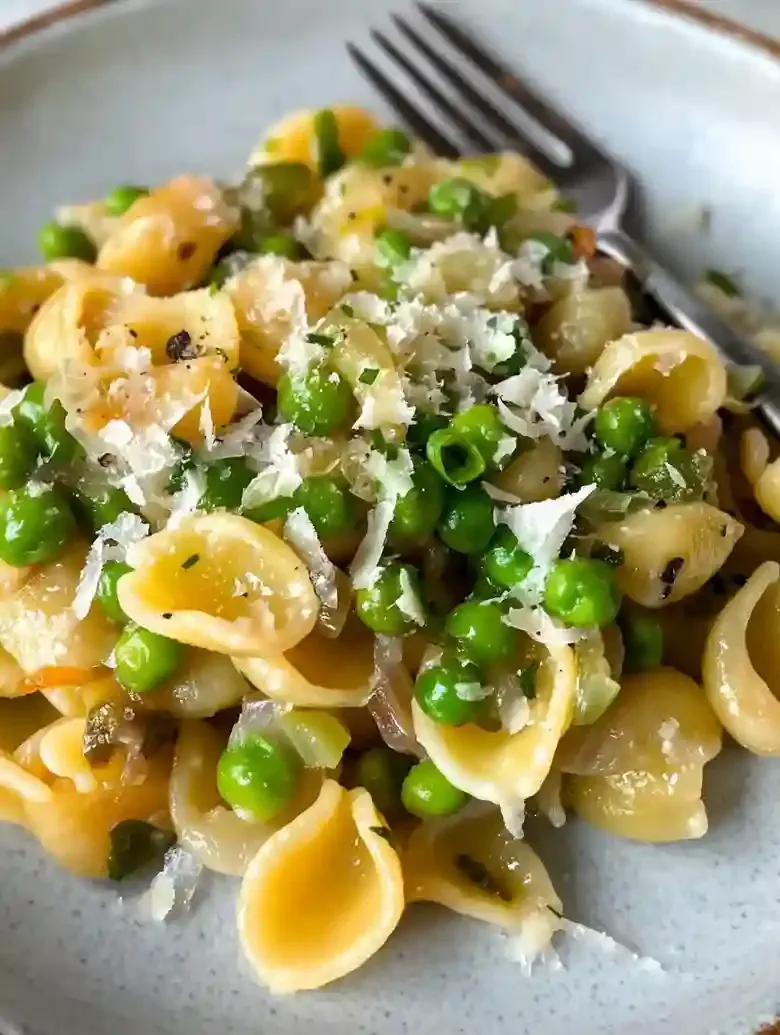
I often find myself in a bind during a busy weeknight, wondering what to serve for dinner. This recipe solves that dilemma perfectly. It’s quick enough for those hectic days while delivering impressive flavor from just a few ingredients.
With only 25 minutes from start to finish, you can easily whip this up any time. The creamy texture, combined with the sweetness of the peas, makes every forkful something special, proving that cooking doesn’t have to be complex to be enjoyable.
If you love seasonal dishes, don’t miss my broccolini frittata recipe, a fantastic option that’s just as easy and delicious!
Table of contents
Why You Will Love This Recipe
- Spring Freshness , The vivid peas add a burst of color that screams springtime. Their natural sweetness brightens the dish and enhances the overall flavor profile, making it feel refreshing.
- Simple Yet Flavorful , With just a few quality ingredients, this dish brings together fantastic flavors. Sweet onions caramelize beautifully, providing depth that pairs well with the sharpness of Pecorino cheese.
- Quick to Prepare , In just 25 minutes, you can have a warm and comforting bowl of pasta ready to serve. This makes it an ideal dish for busy weeknights without compromising on taste.
- Versatile Dish , This pasta adapts well to your pantry staples. Feel free to incorporate other veggies or proteins you have on hand, allowing for creativity based on your preferences.
Pasta with Peas and Pecorino
- Prep Time: 5 minutes
- Cool Time:
- Cook Time: 20 minutes
- Total Time: 25 minutes
- Yield: 4 servings 1x
- Category: Main Course
- Method: Sautéing and Boiling
- Cuisine: Italian
- Diet: Vegetarian
Description
A delicious pasta dish featuring peas, Pecorino Romano cheese, and caramelized onions, perfect for a quick weeknight meal.
Ingredients
- 2 medium (about 200g) sweet onions, finely sliced
- 3 tablespoons (45 ml) extra virgin olive oil, divided
- 1 cup (150g) peas, fresh or thawed frozen
- 12 ounces (340g) dried short pasta, such as orecchiette or shells
- ¾ cup (about 75g) Pecorino Romano cheese, freshly grated
- Optional: 1 tablespoon (14g) butter
- Optional: Handful (about 30g) baby spinach
- ½ teaspoon dried tarragon
- ½ teaspoon dried marjoram (can substitute oregano)
- Salt and pepper, to taste
Instructions
- Step 1: Heat 1 tablespoon (15 ml) of extra virgin olive oil in a large skillet over medium heat until the oil shimmers slightly.

- Step 2: Add the finely sliced onions to the skillet. Cook, stirring occasionally, for about 10 minutes until onions turn soft and start to brown and caramelize. Watch carefully to avoid burning, aiming for a golden color for added sweetness. If using butter, add 1 tablespoon (14g) after the onions have softened.
- Step 3: While onions cook, bring a large pot of salted water to a boil. Add the pasta and cook according to the package instructions until al dente. Drain and set aside, reserving some pasta water if desired.
- Step 4: To the caramelized onions, add the peas, 1 tablespoon (15 ml) olive oil, dried tarragon, and dried marjoram. Stir to combine, then cover the skillet and reduce heat to medium-low. Cook for about 5 minutes, until peas are bright green and heated through. Stir occasionally to prevent sticking.
- Step 5: If using baby spinach, add it to the skillet after peas have cooked 5 minutes. Stir gently and cook just about 1 minute until spinach wilts but retains color.
- Step 6: Add the drained pasta directly to the skillet with the vegetable mixture. Toss thoroughly to coat pasta evenly. Adjust seasoning with salt and pepper to taste.
- Step 7: Remove from heat and stir in the grated Pecorino Romano cheese until it melts into the pasta. Add additional cheese if a more pronounced cheesy flavor is desired.
Notes
- Room Temperature: Store in an airtight container, away from direct sunlight, for up to 2 days.
- Refrigeration: Keep in an airtight container in the refrigerator for up to 4 days. Reheat gently before serving.
- Freezing: Transfer to a freezer-safe container or bag and freeze for up to 2 months. Thaw in the refrigerator overnight before reheating.
- For perfectly caramelized onions, aim for a golden brown color after about 10 minutes of cooking, stirring occasionally to prevent burning.
- If peas become mushy, lower heat and cook only 3 minutes to preserve their vibrant color and texture.
- To stop pasta from overcooking, rinse briefly under cold water if needed after draining.
- For enhanced flavor, sprinkle an extra pinch of salt over the pasta just before serving if it tastes bland.
- Add spinach near the end of cooking to avoid loss of bright color and over-wilting.
- Reheat pasta gently over low heat in a skillet or microwave to retain texture and flavor, adding a small splash of water or olive oil if it seems dry.
- Serve pasta with peas alongside mixed greens, a simple arugula salad, or roasted asparagus. Garlic sautéed spinach also pairs well. Tip with extra Pecorino Romano or a drizzle of quality extra virgin olive oil. A squeeze of fresh lemon juice brightens the dish further.
Nutrition
- Serving Size: 1 serving
- Calories: 350
- Sugar: Not explicitly provided
- Sodium: Not explicitly provided
- Fat: Not explicitly provided
- Saturated Fat: Not explicitly provided
- Unsaturated Fat: Not explicitly provided
- Trans Fat: 0g
- Carbohydrates: Not explicitly provided
- Fiber: Not explicitly provided
- Protein: Not explicitly provided
- Cholesterol: Not explicitly provided
Ingredient Notes
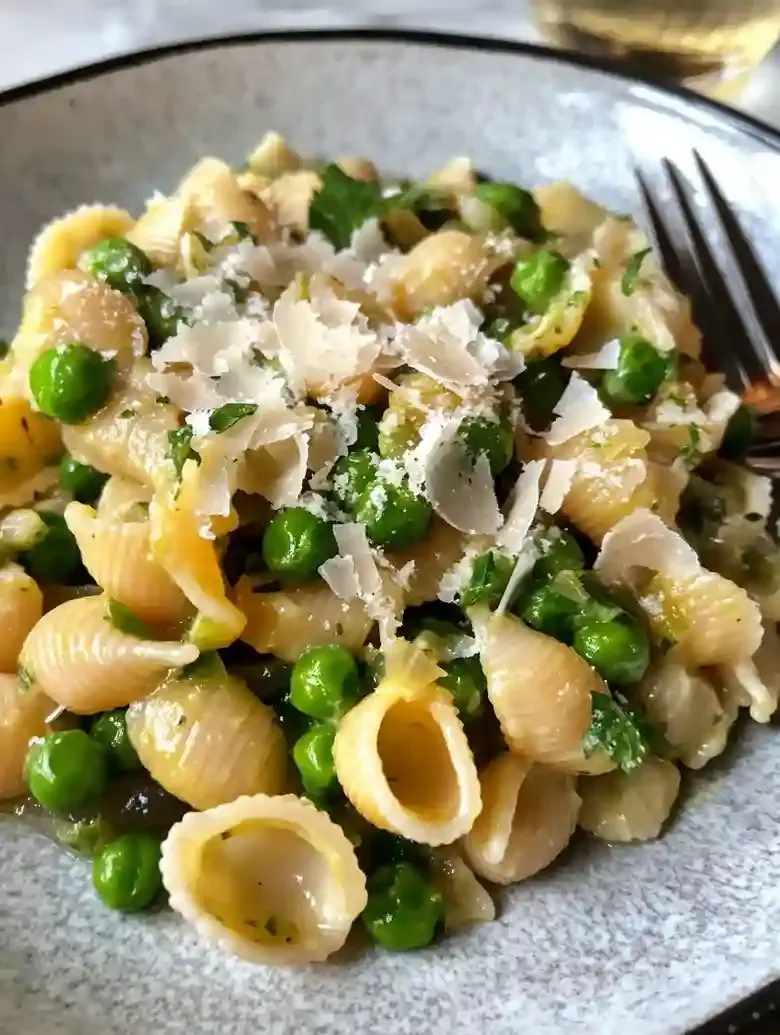
- Pasta: Use high-quality dried pasta, preferably a shape that holds sauce well, like orecchiette or shells. Fresh pasta also works but needs less cooking time.
- Pecorino Romano: Choose a good-quality, aged Pecorino Romano for a sharp, salty flavor. Grate it fresh for the best taste. If unavailable, you can use Parmesan but it will change the flavor profile.
- Peas: Fresh, sweet peas are ideal for this dish. If out of season, frozen peas work well too, just make sure to thaw them before adding to the pasta.
- Olive oil: Use a high-quality extra virgin olive oil for its robust flavor. It helps bring the dish together and adds richness. Avoid low-quality oils that might taste bitter.
- Garlic: Fresh garlic is key for depth of flavor. Mince it finely to release its oils, but don’t sauté it too long to prevent bitterness. Garlic powder can be a substitute but will alter the taste.
- Pasta: Use high-quality dried pasta, preferably a shape that holds sauce well, like orecchiette or shells. Fresh pasta also works but needs less cooking time.
- Pecorino Romano: Choose a good-quality, aged Pecorino Romano for a sharp, salty flavor. Grate it fresh for the best taste. If unavailable, you can use Parmesan but it will change the flavor profile.
- Peas: Fresh, sweet peas are ideal for this dish. If out of season, frozen peas work well too, just make sure to thaw them before adding to the pasta.
- Olive oil: Use a high-quality extra virgin olive oil for its robust flavor. It helps bring the dish together and adds richness. Avoid low-quality oils that might taste bitter.
- Garlic: Fresh garlic is key for depth of flavor. Mince it finely to release its oils, but don’t sauté it too long to prevent bitterness. Garlic powder can be a substitute but will alter the taste.
Recipe Tips
- If peas seem mushy when added to the onions, lower the heat and cook for just 3 minutes to retain their freshness and vibrant color.
- When onions begin to brown and caramelize, usually around 10 minutes, keep a close eye to avoid burning for optimal sweetness.
- If pasta is overcooked after draining, rinse it briefly under cold water to stop the cooking process and maintain texture.
- For bland flavor, sprinkle an additional pinch of salt over the pasta just before serving to boost overall taste without overwhelming the dish.
- If spinach wilts too quickly, add it in the last 2 minutes of cooking for just enough heat to soften without losing its brightness.
Serving Suggestions
Serve pasta with peas alongside mixed greens or a simple arugula salad. Pair with roasted asparagus or garlic sautéed spinach for extra color.
Use pasta with peas to make a spring vegetable medley or combine with grilled chicken in a light dish. Add to a cold pasta salad for refreshing bites.
Top with additional Pecorino Romano or a drizzle of extra virgin olive oil for extra richness. A squeeze of fresh lemon brightens the dish beautifully.
Recipe variations
- You can use any short pasta such as penne, rigatoni, or orecchiette to prepare pasta with peas and Pecorino, adjusting cooking times per package instructions.
- Add dried tarragon (½ teaspoon) and dried marjoram (½ teaspoon) while cooking peas with onions to infuse the dish with delicate herbal notes.
- Either fresh or frozen peas work well; frozen peas save time and still provide a sweet pop, while fresh peas offer a tender texture.
- If doubling the recipe, use 24 ounces of pasta and increase peas to 2 cups, adjusting olive oil to 6 tablespoons and Pecorino cheese to 1½ cups for even flavor distribution.
Save This Recipe!
How to Store?
To keep your pasta with peas fresh and delicious, follow these storage tips:
Room Temperature: Place in an airtight container and store at room temperature up to 2 days. Keep away from direct sunlight.
Refrigeration: Store pasta with peas in an airtight container in the refrigerator for up to 4 days. Reheat gently before serving.
Freezing: Transfer to a freezer-safe container or bag. Freeze up to 2 months. Thaw overnight in the refrigerator before reheating.
Other Recipes You’ll Love
If you enjoyed this pasta with peas or any other recipe on my blog, please leave a ⭐ star rating and let me know how it went in the comments below. I appreciate taking time to read about this recipe, thank you!
