Description
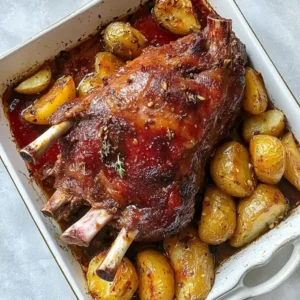
A delicious Greek style roasted leg of lamb seasoned with lemon and served with crispy potatoes.
Ingredients
Scale
- 1 bone-in leg of lamb (5 to 6 pounds)
- 2 sprigs fresh rosemary
- 8 cloves of garlic, peeled and sliced in half lengthwise
- 2 tablespoons extra-virgin olive oil
- Kosher salt and freshly-cracked black pepper, to taste
- 2 cups chicken broth, plus more as needed
- 1 cup white wine, optional, substitute more chicken broth
- Juice of 1 lemon
- 1 tablespoon yellow mustard
- 1 tablespoon dried oregano
- 4 yellow potatoes, peeled and cut into large wedges
Instructions
- Marinate the Lamb: Start by marinating the lamb overnight. You will notice a beautiful aroma from the lemon and herbs mingling together. This step is all about infusing tons of flavor, so do not skip it. If you rush and marinate for just a few hours, you might miss out on that juicy goodness.
- Prep the Oven: Preheat your oven to 350 degrees F. Setting it to the right temperature ahead of time is key for consistent cooking. If you skip preheating, your lamb might not cook evenly, leading to spots that are underdone or overcooked.
- Roast the Lamb: Place the marinated lamb in the oven and let it roast low and slow. You will see it start to brown and smell incredible as it cooks. This long cook time helps break down the meat, making it tender. Avoid opening the oven door too often or it will lose heat.
- Add the Potatoes: Toss the crispy potatoes into the oven near the end of the lamb’s cooking time. They will soak up the savory lamb drippings while crisping up beautifully. If you throw them in too early, they might turn mushy instead of crunching nicely.
- Check for Doneness: Around the 3.5-hour mark, give the lamb a check. You should feel it tender to the touch. If it is tough, it needs more time, wrapped up to keep moisture in. Remember, checking too soon can lead to an inaccurate read on its readiness.
- Rest & Serve: Once the lamb is cooked, let it rest before carving. Give it about 15-20 minutes so those juices redistribute. Cutting too soon can mean a drier texture. Enjoy the aroma as you slice into your beautifully roasted lamb!
Notes
- Storage Tips: Store leftovers in an airtight container in the refrigerator for up to 3 days.
- Expert Tips: Letting the lamb marinate overnight can significantly boost its flavor, making every bite more enjoyable.
- If lamb seems tough after the initial cooking time, reseal the foil and continue cooking, checking for tenderness every 30 minutes.
- For potatoes that end up too soft, consider adding them to the roasting pan about halfway through the cooking process next time.
- If the lamb’s surface starts to brown too much, covering it with parchment paper and foil can help prevent over-browning.
- Reheating Instructions: Reheat in the oven at 350 degrees F until warmed through, about 15-20 minutes.
- Serving Suggestions: Pair with a classic Greek salad for freshness. Serve with tzatziki sauce for a cooling contrast. Accompany with crusty bread to soak up the juices.
- Recipe Variations: Consider adding a touch of honey to the marinade for sweetness. Incorporate olives for a briny twist. Use different herbs like thyme or sage for variation.
- Ingredient Notes: When selecting your leg of lamb, look for a nice layer of fat for added flavor during cooking. If you cannot find yellow potatoes, sweet potatoes or baby red potatoes work as great substitutes. If using white wine as a substitute for broth, use in equal parts.
Nutrition
- Serving Size: 1 serving
- Calories: 342
- Sugar: 1g
- Sodium: 358mg
- Fat: 12g
- Saturated Fat: 3g
- Unsaturated Fat: N/A
- Trans Fat: 0g
- Carbohydrates: 17g
- Fiber: 2g
- Protein: 39g
- Cholesterol: 115mg