Description
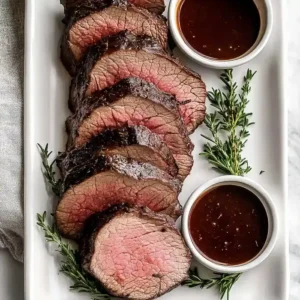
A delicious herb roasted beef tenderloin recipe with a flavorful herb sauce, perfect for special occasions.
Ingredients
Scale
- 5 pounds (2.27 kg) beef tenderloin, trimmed and tied
- 4 tablespoons (57 g) unsalted butter, softened
- 1 tablespoon (15 g) Dijon mustard
- 2 teaspoons (10 g) salt
- 1 teaspoon (2 g) ground black pepper
- 1 tablespoon (1 g) fresh rosemary, finely chopped
- 1 tablespoon (1 g) fresh sage, finely chopped
- 2 teaspoons (1 g) fresh thyme, finely chopped
- Oven
- Meat thermometer
- Baking sheet with rack
- Mixing bowls
- Aluminum foil
Instructions
- Step 1: Remove the beef tenderloin from the refrigerator and its packaging. Let it sit at room temperature for 1 hour to ensure even cooking throughout the roast.

- Step 2: Preheat your oven to 425°F (220°C). Place a rack inside a baking sheet to allow heat circulation around the tenderloin for even browning.
- Step 3: In a mixing bowl, stir together the softened unsalted butter and Dijon mustard until you achieve a smooth and homogeneous mixture.
- Step 4: Rub the butter and mustard mixture all over the surface of the beef tenderloin, ensuring complete and even coverage to create a flavorful crust during roasting.
- Step 5: In another bowl, combine the salt, ground black pepper, finely chopped fresh rosemary, sage, and thyme. Mix these seasonings thoroughly to evenly distribute the herbal flavors.
- Step 6: Sprinkle the herb seasoning mix evenly over the tenderloin. Press gently into the mustard coating to adhere firmly, creating a herb crust as it roasts.
- Step 7: Place the prepared tenderloin on the rack inside the baking sheet. Roast in the preheated oven at 425°F (220°C) for 30 minutes. Check the roast at the halfway point to assess browning and adjust if necessary.
- Step 8: After the initial 30 minutes, reduce the oven temperature to 350°F (177°C). Continue cooking until the tenderloin’s internal temperature reaches your desired doneness: – Medium-rare: 130–135°F (55–58°C) – Medium: 140–145°F (60–63°C) – Medium well: 150–155°F (65–68°C) Use a meat thermometer inserted into the thickest part of the roast for accurate readings.
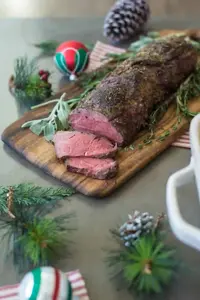
- Step 9: Remove the beef tenderloin from the oven and tent loosely with aluminum foil. Let it rest for at least 30 minutes. This resting period allows the juices to redistribute, producing a juicy and tender result.
- Step 10: Slice the rested beef tenderloin and serve with your choice of sauce. A creamy horseradish sauce is recommended to complement the rich herb flavors of the beef.
Notes
- Room Temperature: Store in an airtight container at room temperature and consume within 2 days to maintain freshness and safety.
- Refrigeration: Keep in an airtight container in the refrigerator for up to 5 days. Cover loosely with foil to preserve moisture without drying out the meat.
- Freezing: Wrap tightly with plastic wrap, place in a freezer-safe container, and freeze for up to 3 months. Thaw overnight in the refrigerator for best results.
- If the crust does not brown well during roasting, increase oven temperature to 450°F (232°C) for the last 10 minutes.
- Remove the roast immediately once it reaches 130°F (54°C) for medium-rare doneness to avoid overcooking.
- For better adherence of herb mixture, add an extra layer of Dijon mustard before applying the herbs.
- To ensure even cooking, rotate the tenderloin halfway through the roasting time.
- Slice against the grain to maintain tenderness and avoid a tough texture.
- Reheat gently in an oven preheated to 300°F (149°C) for 15 to 20 minutes, covering loosely with foil to retain moisture. Use a meat thermometer to check internal temperature has reached at least 130°F (54°C).
- Pair with garlic mashed cauliflower or roasted Brussels sprouts for complementary flavors.
- Serve alongside a fresh arugula salad tossed with balsamic vinaigrette for balance.
- Use leftover slices in beef sandwiches or sliders with sautéed onions and peppers.
- Leftover beef can be added to beef curry or stir-fries for versatile meal options.
- Top freshly sliced beef with chimichurri sauce or horseradish cream for an aromatic finish and add a sprinkle of fresh herbs.
- Substitute fresh rosemary, sage, and thyme with an equal mixture of fresh parsley and tarragon for a different herb profile.
- For a dairy-free version, replace butter with equal parts of olive oil and omit Dijon mustard or use a mustard alternative consistent with dietary needs.
- Select a high-quality beef tenderloin with good marbling; the fat enhances juiciness and flavor during roasting.
- Use good quality extra-virgin olive oil or butter for richness and to help the herbs adhere properly.
- Fresh herbs provide a stronger, more vibrant flavor compared to dried herbs; finely chop to release aromatic oils.
- Freshly minced garlic can be added for extra fragrance and depth but avoid pre-mixed garlic to prevent artificial flavor interference.
- Coarsely ground black pepper adds texture and a punch of heat, enhancing the overall flavor profile.
Nutrition
- Serving Size: 1 serving
- Calories: 350
- Sugar: 1g
- Sodium: 600mg
- Fat: 20g
- Saturated Fat: 7g
- Unsaturated Fat: 10g
- Trans Fat: 0g
- Carbohydrates: 15g
- Fiber: 1g
- Protein: 30g
- Cholesterol: 90mg