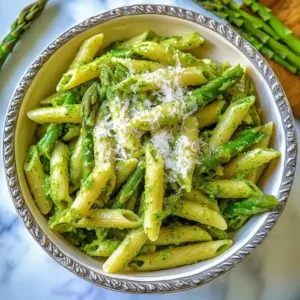
Description
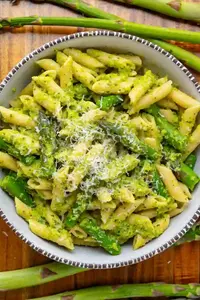
Delicious asparagus pesto pasta made with fresh ingredients and a creamy pesto sauce.
Ingredients
Scale
- 12 ounces (340 g) pasta (such as penne)
- 1 pound (454 g) asparagus, firm and bright green
- 1/4 cup (6 g) fresh basil leaves, bright green
- 1 clove garlic, finely chopped
- 2 tablespoons (14 g) pine nuts, lightly toasted
- 1/4 cup (25 g) Parmigiano Reggiano (Parmesan cheese), freshly grated
- 3 tablespoons (45 ml) extra virgin olive oil
- lemon juice to taste
- salt to taste
Instructions
- Step 1: Bring a large pot of salted water to a boil. Add 12 ounces (340 g) of pasta and cook according to the package instructions, aiming for al dente texture. Check doneness 1-2 minutes before the recommended cooking time to avoid overcooking. Once cooked, drain the pasta, reserving 1-2 cups (240-480 ml) of the cooking water.

- Step 2: While the pasta cooks, bring another pot of water to a boil. Add 1 pound (454 g) of asparagus and blanch for exactly 2 to 3 minutes, until the stalks turn just dark green and remain crisp-tender. Immediately transfer the asparagus to a bowl of ice water to stop the cooking process and preserve color and texture. Drain once cooled.
- Step 3: In a food processor, combine the blanched asparagus, 1/4 cup (6 g) fresh basil leaves, 1 finely chopped garlic clove, 2 tablespoons (14 g) toasted pine nuts, 1/4 cup (25 g) grated Parmesan cheese, 3 tablespoons (45 ml) extra virgin olive oil, lemon juice to taste, and salt to taste. Blend until smooth, stopping to scrape down the sides as needed. Continue blending for an additional 30 seconds if necessary to achieve a creamy consistency.
- Step 4: Toss the drained pasta with the prepared pesto. Add reserved pasta cooking water gradually, starting with 1-2 tablespoons (15-30 ml), to loosen the sauce and reach a creamy coating on the pasta. Adjust salt and lemon juice if needed to balance flavor.
- Step 5: Plate the pasta immediately while warm. Garnish with extra Parmesan cheese or fresh basil leaves if desired. Serve promptly to preserve texture and fresh flavors.
Notes
- Room Temperature: Store in an airtight container at room temperature for up to 1 day. Consume quickly to avoid spoilage of fresh ingredients.
- Refrigeration: Keep in an airtight container in the refrigerator for up to 3 days. Stir gently before serving to redistribute sauce.
- Freezing: Transfer to a freezer-safe container or bag and freeze for up to 1 month. Thaw overnight in the refrigerator before reheating gently.
- Blanch asparagus for exactly 2 minutes to avoid mushiness; immediately cool in ice water to preserve firmness and color.
- Check pasta texture early to ensure al dente doneness, preventing mushy noodles.
- If pesto is too thick, add 1-2 tablespoons of reserved cooking water slowly until desired creaminess.
- Use only one garlic clove to avoid a bitter or overpowering garlic flavor.
- Blend pesto thoroughly, including scraping food processor sides, to achieve smooth consistency.
- Reheat asparagus pesto pasta gently in a skillet over low heat or microwave at medium power until warmed through. Add a splash of reserved cooking water or olive oil to loosen the sauce if it has thickened. Do not overheat to preserve texture.
- Serve asparagus pesto pasta with sides such as roasted cherry tomatoes, sautéed spinach, garlic sautéed green beans, or a fresh arugula salad. Garnish with a sprinkle of toasted pine nuts, fresh lemon zest, or a drizzle of balsamic reduction for added flavor. A dash of chili flakes can provide a subtle heat contrast.
- Substitute zucchini noodles for traditional pasta to create a low-carb option. Use pesto as a dressing for creamy risotto or stuffed bell peppers, or as a pizza topping.
- To add protein, serve with grilled chicken or shrimp alongside or mixed in.
- Select firm, bright green asparagus stalks with no wilting for crisp texture.
- Use raw pine nuts and toast lightly before blending to enhance nuttiness.
- Use fresh basil leaves free of browning for vibrant aroma and flavor.
- Freshly grate Parmesan cheese to avoid additives found in pre-grated types.
- Use extra virgin olive oil with a recent harvest date for best flavor and smooth pesto texture.
- Mince fresh garlic finely for a balanced garlic flavor integrating well into the pesto.
Nutrition
- Serving Size: 1 serving
- Calories: Not provided
- Sugar: Not provided
- Sodium: Not provided
- Fat: Not provided
- Saturated Fat: Not provided
- Unsaturated Fat: Not provided
- Trans Fat: Not provided
- Carbohydrates: Not provided
- Fiber: Not provided
- Protein: Not provided
- Cholesterol: Not provided