

If you’re looking for a simple yet scrumptious asparagus pesto pasta dish, you’ve landed in the right place! This recipe shines with fresh asparagus and a creamy pesto, making it a delightful option for weeknight dinners or a special occasion.
This asparagus pesto pasta recipe resolves the common issues of bland flavors and overcooked vegetables often found in similar dishes.
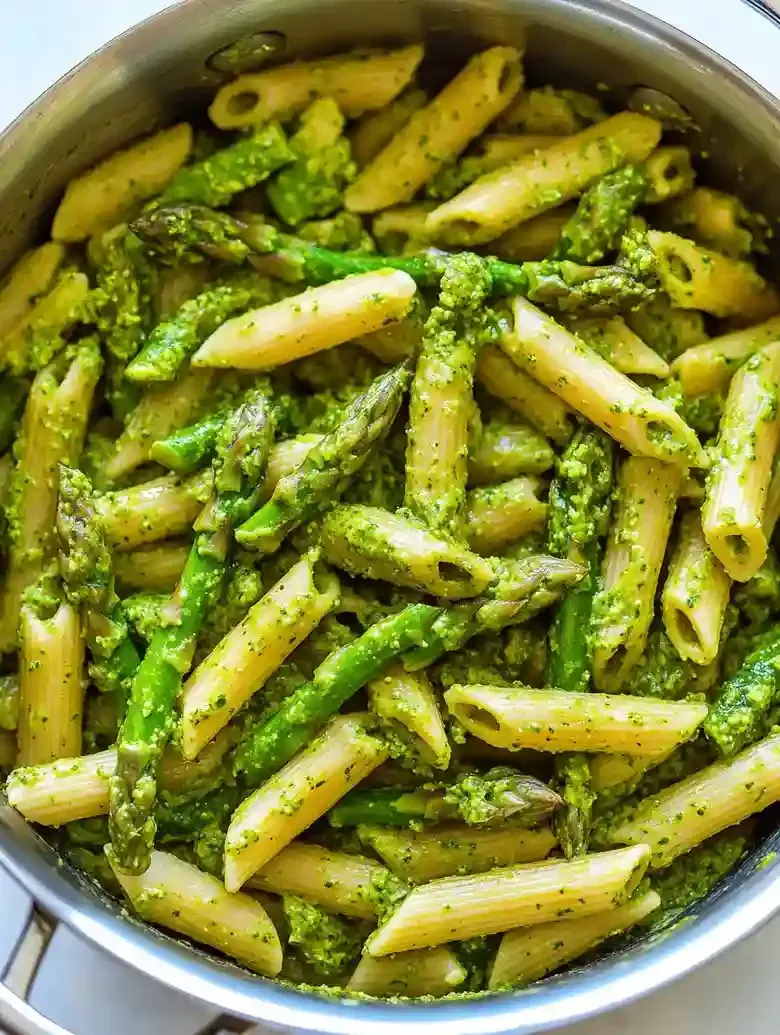
The challenge with many pesto pasta dishes is finding a balance between flavor and texture. I often found that traditional recipes either lacked the creaminess or had an overpowering taste. After some trial and error, I finally created a version that exceeds all my pasta expectations.
With just 10 minutes of prep time and 20 minutes of cooking, this dish not only saves you time but delivers on taste. And let me tell you, the vibrant green pesto paired with the tender pasta feels like a warm hug on a plate.
If you need a quick and satisfying side or main dish, check out my Broccolini Frittata for another light, healthy option!
Table of contents
Why You Will Love This Recipe
- Fresh and Flavorful , The combination of tender asparagus and aromatic basil gives this pasta a bright, spring vibe. Each bite bursts with the flavors of garden-fresh ingredients, making it a truly rewarding dish to enjoy.
- A Wholesome Dish , Asparagus is packed with vitamins and minerals, while the nuts in the pesto offer healthy fats. This pasta not only satisfies the taste buds but also provides nutritional benefits that make it guilt-free.
- Versatile for Any Occasion , This pasta can shine as a light main course or a side dish at barbecues and family dinners. It adapts seamlessly to any meal, fitting various dining scenarios easily.
- Quick to Prepare , Ready in just 30 minutes, this dish is a lifesaver on busy weeknights. The fast prep and cook times mean you can whip up a nourishing meal without feeling rushed.
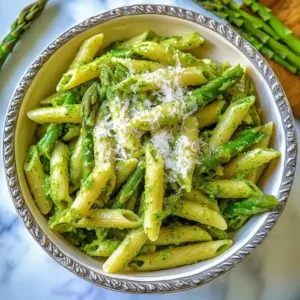
Asparagus Pesto Pasta
- Prep Time: 10 minutes
- Cool Time:
- Cook Time: 20 minutes
- Total Time: 30 minutes
- Yield: 4 servings 1x
- Category: pasta
- Method: boiling and blanching
- Cuisine: Italian
- Diet: Vegetarian
Description
Delicious asparagus pesto pasta made with fresh ingredients and a creamy pesto sauce.
Ingredients
- 12 ounces (340 g) pasta (such as penne)
- 1 pound (454 g) asparagus, firm and bright green
- 1/4 cup (6 g) fresh basil leaves, bright green
- 1 clove garlic, finely chopped
- 2 tablespoons (14 g) pine nuts, lightly toasted
- 1/4 cup (25 g) Parmigiano Reggiano (Parmesan cheese), freshly grated
- 3 tablespoons (45 ml) extra virgin olive oil
- lemon juice to taste
- salt to taste
Instructions
- Step 1: Bring a large pot of salted water to a boil. Add 12 ounces (340 g) of pasta and cook according to the package instructions, aiming for al dente texture. Check doneness 1-2 minutes before the recommended cooking time to avoid overcooking. Once cooked, drain the pasta, reserving 1-2 cups (240-480 ml) of the cooking water.

- Step 2: While the pasta cooks, bring another pot of water to a boil. Add 1 pound (454 g) of asparagus and blanch for exactly 2 to 3 minutes, until the stalks turn just dark green and remain crisp-tender. Immediately transfer the asparagus to a bowl of ice water to stop the cooking process and preserve color and texture. Drain once cooled.
- Step 3: In a food processor, combine the blanched asparagus, 1/4 cup (6 g) fresh basil leaves, 1 finely chopped garlic clove, 2 tablespoons (14 g) toasted pine nuts, 1/4 cup (25 g) grated Parmesan cheese, 3 tablespoons (45 ml) extra virgin olive oil, lemon juice to taste, and salt to taste. Blend until smooth, stopping to scrape down the sides as needed. Continue blending for an additional 30 seconds if necessary to achieve a creamy consistency.
- Step 4: Toss the drained pasta with the prepared pesto. Add reserved pasta cooking water gradually, starting with 1-2 tablespoons (15-30 ml), to loosen the sauce and reach a creamy coating on the pasta. Adjust salt and lemon juice if needed to balance flavor.
- Step 5: Plate the pasta immediately while warm. Garnish with extra Parmesan cheese or fresh basil leaves if desired. Serve promptly to preserve texture and fresh flavors.
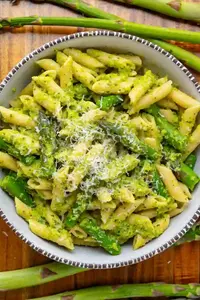
Notes
- Room Temperature: Store in an airtight container at room temperature for up to 1 day. Consume quickly to avoid spoilage of fresh ingredients.
- Refrigeration: Keep in an airtight container in the refrigerator for up to 3 days. Stir gently before serving to redistribute sauce.
- Freezing: Transfer to a freezer-safe container or bag and freeze for up to 1 month. Thaw overnight in the refrigerator before reheating gently.
- Blanch asparagus for exactly 2 minutes to avoid mushiness; immediately cool in ice water to preserve firmness and color.
- Check pasta texture early to ensure al dente doneness, preventing mushy noodles.
- If pesto is too thick, add 1-2 tablespoons of reserved cooking water slowly until desired creaminess.
- Use only one garlic clove to avoid a bitter or overpowering garlic flavor.
- Blend pesto thoroughly, including scraping food processor sides, to achieve smooth consistency.
- Reheat asparagus pesto pasta gently in a skillet over low heat or microwave at medium power until warmed through. Add a splash of reserved cooking water or olive oil to loosen the sauce if it has thickened. Do not overheat to preserve texture.
- Serve asparagus pesto pasta with sides such as roasted cherry tomatoes, sautéed spinach, garlic sautéed green beans, or a fresh arugula salad. Garnish with a sprinkle of toasted pine nuts, fresh lemon zest, or a drizzle of balsamic reduction for added flavor. A dash of chili flakes can provide a subtle heat contrast.
- Substitute zucchini noodles for traditional pasta to create a low-carb option. Use pesto as a dressing for creamy risotto or stuffed bell peppers, or as a pizza topping.
- To add protein, serve with grilled chicken or shrimp alongside or mixed in.
- Select firm, bright green asparagus stalks with no wilting for crisp texture.
- Use raw pine nuts and toast lightly before blending to enhance nuttiness.
- Use fresh basil leaves free of browning for vibrant aroma and flavor.
- Freshly grate Parmesan cheese to avoid additives found in pre-grated types.
- Use extra virgin olive oil with a recent harvest date for best flavor and smooth pesto texture.
- Mince fresh garlic finely for a balanced garlic flavor integrating well into the pesto.
Nutrition
- Serving Size: 1 serving
- Calories: Not provided
- Sugar: Not provided
- Sodium: Not provided
- Fat: Not provided
- Saturated Fat: Not provided
- Unsaturated Fat: Not provided
- Trans Fat: Not provided
- Carbohydrates: Not provided
- Fiber: Not provided
- Protein: Not provided
- Cholesterol: Not provided
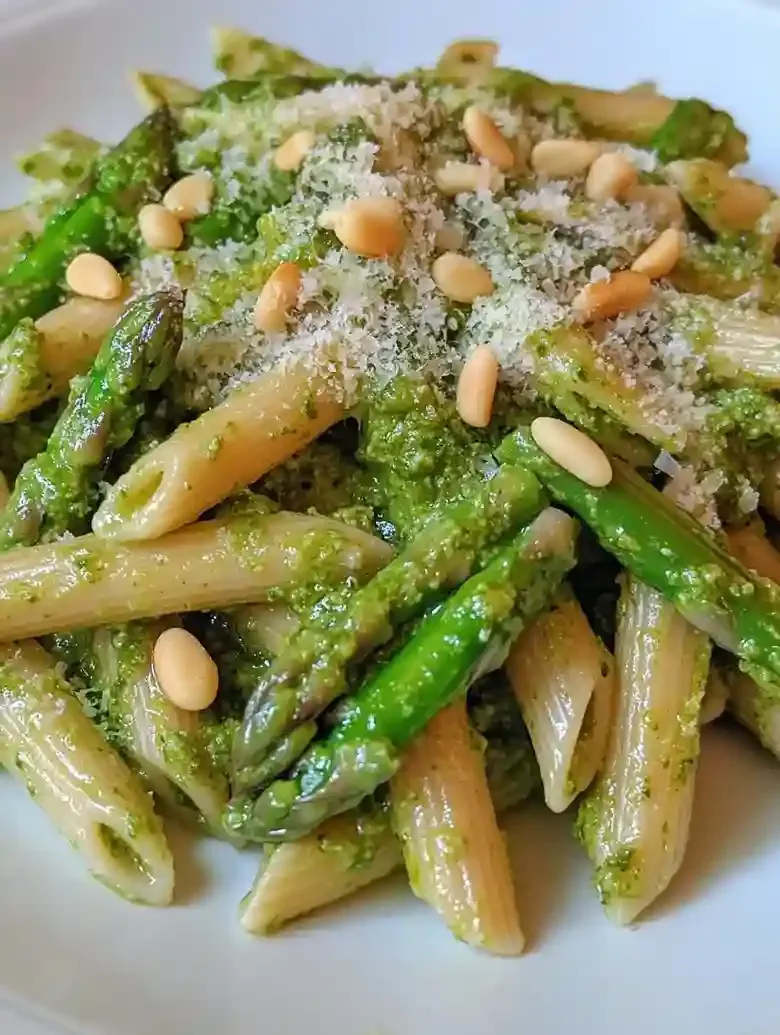
Ingredient Notes
- Asparagus: Look for bright green stalks, firm to the touch, without any wilting. Fresh asparagus is key for a crisp texture in your pasta.
- Pine nuts: Choose raw pine nuts for a buttery flavor. Toast them lightly before using to enhance their nuttiness, which really boosts the pesto.
- Basil: Fresh basil is a must! Select bright green leaves with no browning. This adds vibrant flavor and aroma, making the pesto stand out.
- Parmesan cheese: Grate a good-quality Parmesan for the rich, savory flavor it adds. Use freshly grated to avoid the additives found in pre-grated versions.
- Olive oil: Extra virgin olive oil works best for a smooth pesto and rich flavor. Look for a bottle with a harvest date for optimal freshness.
- Garlic: Opt for fresh garlic bulbs; they give a punchy flavor. Mince it finely to ensure it blends well into the pesto, enhancing the overall taste.
- Asparagus: Look for bright green stalks, firm to the touch, without any wilting. Fresh asparagus is key for a crisp texture in your pasta.
- Pine nuts: Choose raw pine nuts for a buttery flavor. Toast them lightly before using to enhance their nuttiness, which really boosts the pesto.
- Basil: Fresh basil is a must! Select bright green leaves with no browning. This adds vibrant flavor and aroma, making the pesto stand out.
- Parmesan cheese: Grate a good-quality Parmesan for the rich, savory flavor it adds. Use freshly grated to avoid the additives found in pre-grated versions.
- Olive oil: Extra virgin olive oil works best for a smooth pesto and rich flavor. Look for a bottle with a harvest date for optimal freshness.
- Garlic: Opt for fresh garlic bulbs; they give a punchy flavor. Mince it finely to ensure it blends well into the pesto, enhancing the overall taste.
Recipe Tips
- If asparagus turns mushy, blanch it in boiling water for exactly 2 minutes, then transfer to ice water to stop cooking immediately.
- When the pasta is undercooked, check for al dente texture 1-2 minutes before package instructions finish, then drain and reserve cooking water.
- If the pesto appears too thick, gradually mix in 1-2 tablespoons of reserved pasta cooking water until you reach the desired creamy consistency.
- For bitter garlic taste, use only 1 clove in the pesto; this keeps the flavor mild and complements the asparagus and basil nicely.
- If you notice your pesto isn’t smooth, blend for an additional 30 seconds, stopping to scrape down the sides to incorporate all ingredients fully.
Serving Suggestions
Serve asparagus pesto pasta with a side of roasted cherry tomatoes or sautéed spinach for a vibrant addition. I’m fond of pairing it with garlic sautéed green beans or a fresh arugula salad.
Add to zucchini noodles or use it in a creamy risotto for a twist. You can also incorporate it into stuffed bell peppers or use it as a topping for pizza.
Top with a sprinkle of toasted pine nuts or a drizzle of balsamic reduction for extra flavor. Fresh lemon zest or a dash of chili flakes also adds nice finishing touches.
Recipe variations
- You can use different types of pasta such as penne or fusilli to create varied textures in this asparagus pesto pasta recipe while keeping the proportions the same.
- Add 1 to 2 tablespoons of lemon juice to the pesto depending on tartness preference, and 1/4 teaspoon salt to bring out the flavors fully without overpowering.
- Either fresh or frozen asparagus works well here; blanch fresh asparagus for 2 to 3 minutes, or thaw frozen before blending it into the pesto for smooth consistency.
- If cooking for more than four servings, double the ingredients and reserve 2 to 4 cups of pasta water. Stir gradually to maintain the creamy sauce texture, similar to Parmesan Linguine and Garlic Butter Meatballs.
Save This Recipe!
How to Store?
To keep your asparagus pesto pasta fresh and delicious, follow these storage tips:
Room Temperature: Place in an airtight container, store at room temperature up to 1 day. Consume quickly to avoid spoilage from fresh ingredients.
Refrigeration: Keep in an airtight container in the refrigerator for up to 3 days. Stir before serving to redistribute the sauce evenly.
Freezing: Transfer to a freezer-safe container or bag. Freeze for up to 1 month. Thaw in the refrigerator overnight before reheating gently.
Other Recipes You’ll Love
If you enjoyed this asparagus pesto pasta or any other recipe on my blog, please leave a ⭐ star rating and let me know how it went in the comments below. I appreciate taking time to read about this recipe, thank you!
